You know what needs to be said. You just don’t say it.
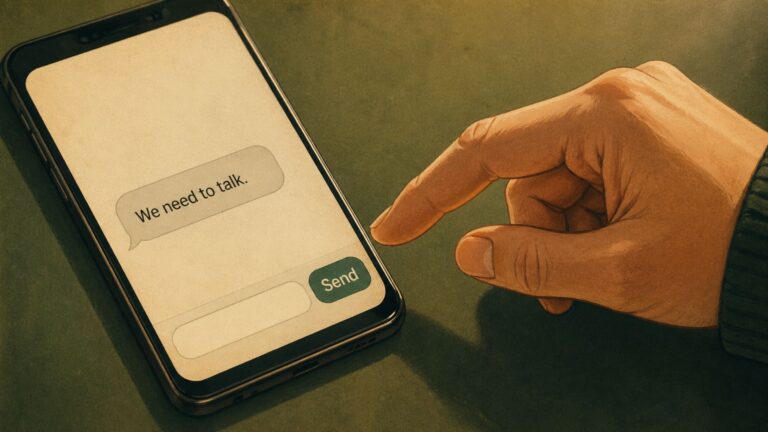
Difficult conversations aren’t delayed because you lack the words. They’re delayed because of what might follow.
You don’t think about it all the time. It’s not on your to-do list..
But it’s there.
It shows up at the exact moment when the conversation can no longer stay surface-level. And right there, you pause, you soften, you postpone.
At first, it feels reasonable like you’re avoiding tension.
Then it starts to repeat.
And at some point, the question is no longer whether the conversation exists, but why you’re still avoiding it.
„And at some point, the question is no longer whether the conversation exists, but why you’re still avoiding it..“
This isn’t about a lack of words.
The easiest explanation is that you don’t know how to say it. That the topic is delicate. That you just need a little more time.
But if you pause for a moment, something simpler becomes clear.
You already have a sense of what you want to say. Not in perfectly formed sentences, but enough to know where the conversation is leading.
What’s holding you back isn’t a lack of words. It’s the clarity of the consequences.
Because this conversation won’t leave things the same.
It will require a position.
It will set a boundary.
It will lead to a decision.
And that’s exactly what makes it difficult.
"The problem isn’t the words. The problem is that clarity comes at a cost."
What this looks like in real life
This pattern isn’t abstract.
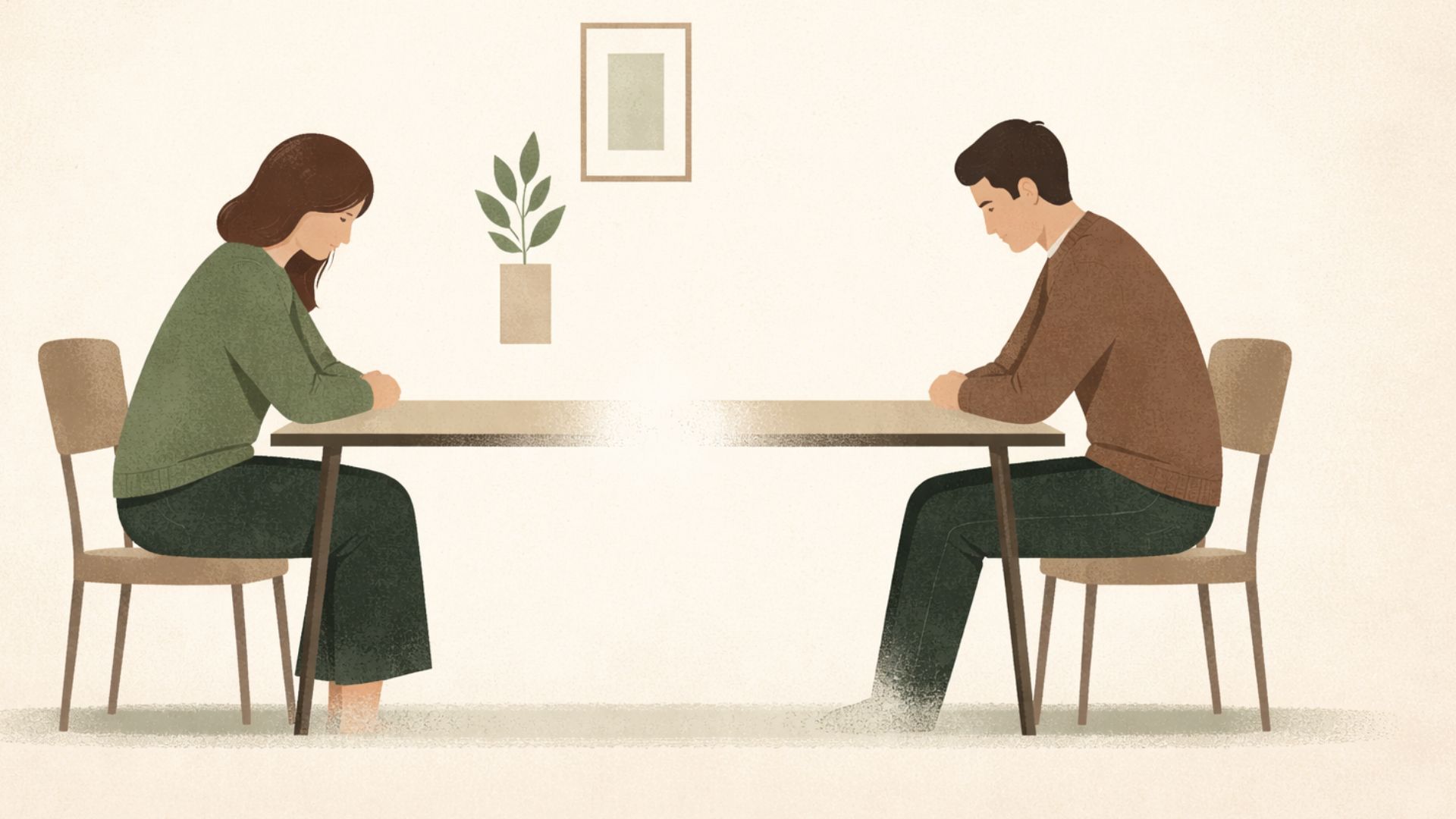
There’s a conversation with someone you live with that keeps starting but never reaches the point.
There’s a topic at work you keep postponing because you know it will shift the dynamic.
There’s something that hasn’t been working for a while, but you keep holding onto it because you’re not sure what comes next.
On the outside, everything looks calm, no conflict, no moment forcing you to act, and that’s exactly why you don’t.
But internally, tension begins to build.
Between what you understand and what you say.
Between what you want and what you allow.
And that gap doesn’t stay neutral. It starts to weigh on you.
„The hardest conversations aren’t the ones that happen. They’re the ones that remain unfinished..“
The easiest explanation
When a conversation is delayed for long enough, explanations start to appear that sound completely reasonable.
It’s not the right moment.
It will only make things more complicated.
There’s no need to create tension.
Maybe it will sort itself out.
These explanations do one thing, they make postponing feel like a choice.
But in most cases, it isn’t.
More often, it’s a quiet form of backing down that sounds logical.
Rational explanations often hide a decision you’ve already made - not to act.
What are you really avoiding
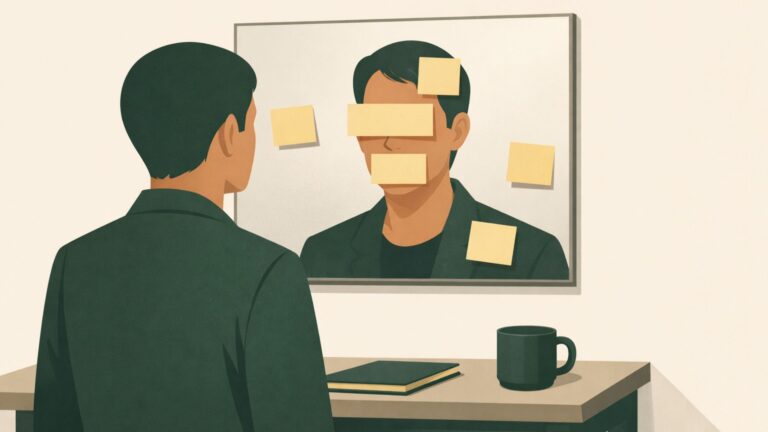
This is the part you usually move past. You’re not avoiding the conversation, you’re avoiding what it will make visible.
That something is no longer right.
That a boundary has been crossed for too long.
That a decision has already been made internally.
That there’s no going back to how things were.
There’s a moment when you see it clearly. You know what needs to be said.
And that’s exactly why you stay silent.
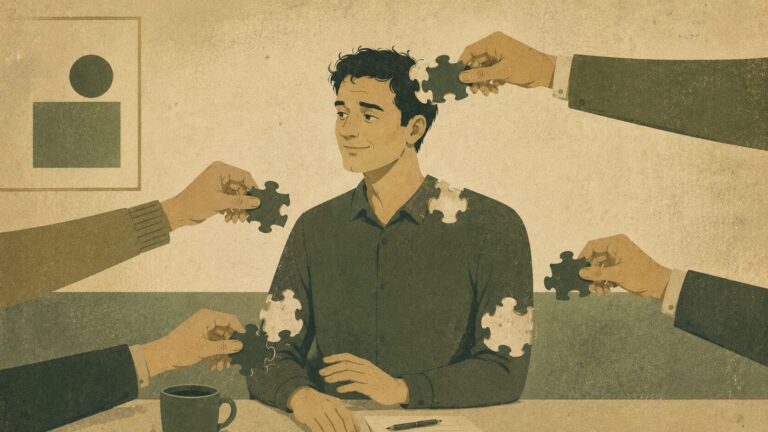
"Silence doesn’t protect the situation. It protects a version of you that no longer fits."
The illusion of control
When you don’t have the conversation, it feels like you’re keeping things stable.
You avoid tension, protect the relationship, keep things from getting complicated.
In the short term, it works. In the long term, it starts to crack.
Clarity fades.
Topics get sidestepped.
Reactions become stronger.
Conversations grow more superficial.
And instead of one conversation that could bring clarity, you end up in a situation where nothing is fully clear.
Silence rarely preserves stability. More often, it slowly erodes it.
"The control you hold on to is often the very thing keeping you in the same place."
The cost you don’t see right away
The longer you delay the conversation, the harder it becomes to explain why.
You know there’s a topic you’re not bringing up.
And something more uncomfortable than the conversation itself begins to show up.
Irritation.
Not just toward the situation, but toward yourself.
You see it. You understand it and… you don’t act.
And at that point, it’s no longer just about the conversation.
It becomes about self-respect.
"Self-respect isn’t lost all at once. It’s lost in things you know but don’t say."
The moment you can no longer ignore it
That moment rarely comes with conflict. It comes quietly.
When you start reacting more strongly than the situation calls for.
When the same topics keep coming up but are never named directly.
When conversations get shorter, and your thoughts get longer.
At that point, it becomes clear.
The conversation you’ve been postponing starts to shape things. And the cost of staying silent becomes higher than the cost of having it.
"At some point, the question is no longer whether you’ll have the conversation, but whether it will already be too late.".“
The problem isn’t how to say it
At this point, you start looking for the right words.
You try to phrase it, to structure it, to avoid conflict, but that’s not where the problem is.
The problem is that the question isn’t clear enough yet.
What exactly do you want to say?
What is actually bothering you?
But that’s not where the problem is.
What are you no longer willing to accept?
Until that becomes clear, the conversation can’t be clear and that’s why it keeps getting delayed.
"Clarity doesn’t come from finding the right words. It comes from asking the right question."
Difficult conversations: where change begins
A conversation doesn’t start with words. It starts with a question.
And this is where you stay the longest thinking more, analyzing more, but not moving forward.
Not because you’re not doing enough, but because your thinking lacks structure.
„Clarity doesn’t come from more thinking, it comes from a more precise conversation.
In moments like this, a well-led conversation changes something essential. Not as advice from the outside, but as a way to see more clearly what you already know but haven’t yet articulated.
That’s exactly what 4D Dialogue is for.
A conversation that doesn’t add noise, but brings clarity so it becomes clear what the real question is and what follows from it.
There are conversations that don’t happen for a long time but they rarely come without consequences.
At some point, they begin to shape how you think, how you react, and how you see yourself.
And then the question is no longer whether to have the conversation, but why you’re still delaying it.
Sometimes what’s missing isn’t more thinking, but a conversation that helps you organize what you already know but haven’t yet put into words.
If there’s a topic that keeps circling but never turns into action, it’s most likely that kind of conversation.
Start the conversation
(4D Dialogue session)