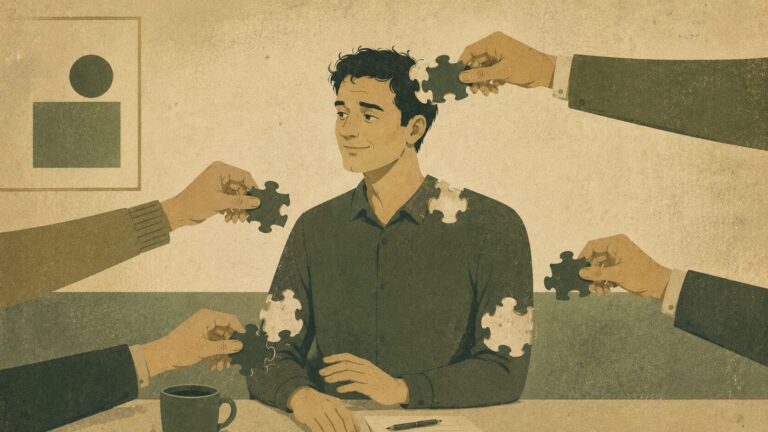
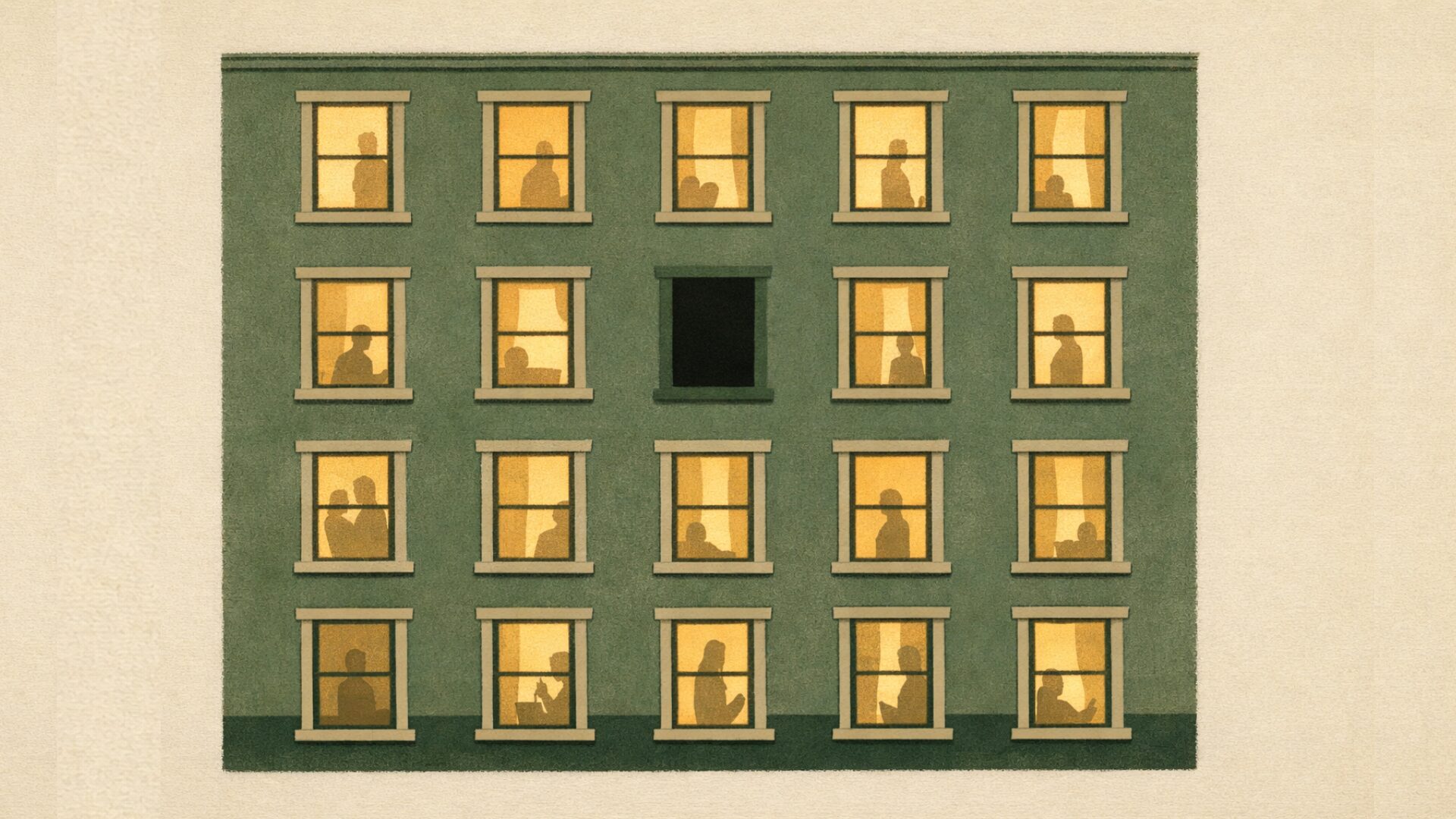
You see everything. And still miss what matters most.
You’re in a conversation you could start, but you don’t.
You write a message you could send, but you don’t send it. You keep coming back to the same thought, explaining it over and over again, and still nothing changes.
Sometimes this feels like difficulty making a decision. In reality, more often than not, it’s not clarity you lack, but the willingness to follow through on what you already see.
If you’re honest with yourself, the question isn’t what you should do.
You already know.
„The question is how much longer you’ll pretend you don’t.„
At that point, people rarely admit it directly. It’s easier to tell yourself you need more time, more perspective, one more conversation to “figure things out.” It sounds reasonable and that’s exactly why it works.
But if you pause for a moment, you’ll notice something simpler.
The picture is already clear enough; not perfect, not complete, but clear enough to sense where it’s leading. And still, you stay where you are.
Not because you don’t see, but because you see exactly where it leads.
Most often, it’s something very concrete: a conversation you’re postponing, a decision you’re not making, or something you’re not saying out loud.
False clarity
This is the moment when everything is clear… and nothing happens.
And this is exactly where most people don’t stay long enough, because it doesn’t look like a problem. On the contrary, it looks like understanding.
You can explain the situation, you can see both sides, you can arrange the logic so that everything makes sense. And that’s precisely why you don’t make a choice.
“False clarity isn’t the absence of an answer. It’s an answer you don’t want to follow.”
Where movement breaks down in decision-making
This often feels like difficulty making a decision, but in most cases it’s not a lack of clarity. Research in decision-making shows that choice is rarely purely logical and is often shaped by emotions, context, and the way we perceive the situation.
When there’s no action, thinking intensifies. More analysis, more explanations, more attempts to “close the loop.” At some point, you start calling this a process.
You keep coming back to the same situation, thinking about it more, explaining it to yourself again, but the conversation doesn’t happen, the decision isn’t made, nothing changes.
Само че това не е процес, а отлагане, което изглежда логично. Истината е по-проста и по-неудобна.
The decision has already been made, you’re just not ready to live with the consequences.
You’re not avoiding the situation. You’re avoiding what will become clear if you fully face it, that something no longer works, that a line has already been crossed, that there’s no going back.
"You’re not avoiding the truth, you’re avoiding what it will require of you.”
The One Thing
In almost every situation, there is one thing that holds everything else together. It’s not a list. It’s not options.
One thing;
A conversation you’re not having.
A decision you’re postponing.
A truth you’re not saying out loud.
As long as you avoid it, everything feels complicated. The moment you see it clearly, the complexity disappears.
The way out doesn’t start with more thinking.
It starts the moment you stop circling around that one thing and stay exactly where you usually pull away.
Not to solve it immediately, but to face it without running from it.
That’s where movement begins.
Not because the situation changes, but because you’re no longer distracted from it.
Where change begins
Change starts the moment you stop circling around the one thing. Not when you’ve thought about it a bit more, but when you finally stay with what is already clear.
This is hard to do on your own.
Not because you lack the ability, but because the mind naturally looks for a way out that preserves balance.
And this is exactly where a different kind of conversation makes the difference.
his is where the conversation starts to matter. Not a conversation that adds more perspectives, but one that holds your attention exactly where you usually pull it away. In 4D Dialogue. , this is where the work begins.
You don’t start from answers. You start from the question you can no longer avoid.
And the moment it becomes clear, the next step isn’t something you have to figure out, it becomes obvious.
There are situations where you don’t lack clarity, you lack the decision to follow it..
And as long as you keep avoiding what you already see, you will continue to see everything and still miss the one thing that moves everything else.
You probably already know what your “one thing” is.
The question isn’t whether you see it.
The question is whether you’re ready to stop avoiding it.
And to stay with it long enough for the next step to become obvious.
And in most cases, the answer doesn’t come. It’s already there.
Sometimes, one conversation, is enough the kind you can’t escape the question in.