
We Were There Together, So Why Do We Remember Different Things?
How can two people experience the same situation in completely different ways?
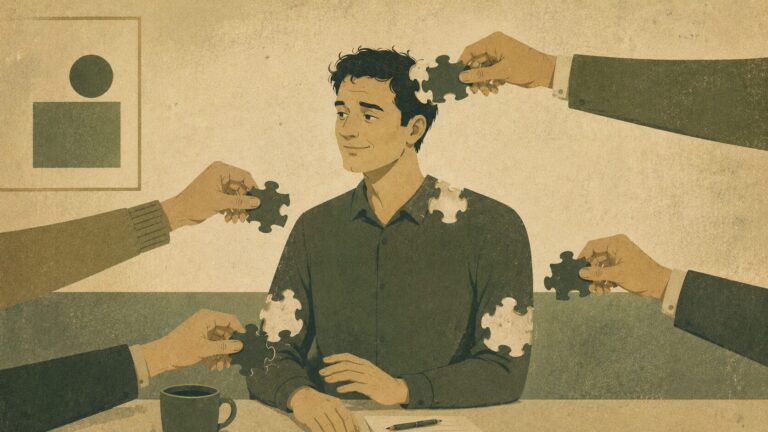
Over the past few weeks, several conversations have brought something to my attention that I hadn't really given much thought to before. Two people describe the same incident. They were in the same place, heard the same words, and yet, when you listen to them separately, you get the impression they're talking about two entirely different events. What makes it even more intriguing is that both seem completely sincere. Neither, at least on the surface, appears to be lying, exaggerating, or trying to portray the other in a bad light, and yet one remembers an enjoyable conversation while the other still feels hurt by something that was said. One came away thinking the evening had been wonderful, while the other spent half of it feeling uncomfortable without anyone noticing.
It made me wonder how often we assume that simply because we were present at an event, we know what happened, and when someone describes it differently, our first reaction is usually disbelief that they could have failed to notice or understand something that seemed so obvious to us. I started looking into various studies to understand why this happens and came across several interesting explanations for how our past experiences, expectations, and even our state of mind at the time influence the way we perceive and remember the very same event.
We Don't All Notice the Same Things
Imagine a dinner with friends where someone is telling a story, everyone is laughing, and the conversation carries on. The next day, one person remembers how much fun they had, another recalls that the host barely had a chance to speak, while a third has been left with the uncomfortable feeling that several of the jokes were at their expense. Nobody left the table, nobody raised their voice, and there was no dramatic moment that might explain the difference. Each person simply paid attention to different details, and those details shaped what stayed with them.
In a 1999 study, Daniel Simons and Christopher Chabris, both associated with Harvard University at the time, explored a fascinating aspect of human attention: we can fail to notice something perfectly obvious when we're concentrating on something else. In their well-known experiment, participants watched a video of people passing a basketball and were asked to count the passes. While they were focused on the task, a person dressed in a gorilla costume walked through the scene, yet a substantial number of participants failed to notice them at all. What makes this particularly striking is that the gorilla was right in front of their eyes, but their attention was directed elsewhere.
Of course, the experiment wasn't about friendships, but it illustrates something important about human perception: being present in a situation doesn't mean we've noticed everything happening around us. In everyday conversations, similar omissions can go unnoticed for years. One person remembers what was said, another remembers the expression with which those words were received, and sometimes neither has paid attention to the circumstances that might explain a third person's.
The Past Is Present in Our Conversations
There is a particular kind of unfairness in human relationships: sometimes we pay the price for experiences that had nothing to do with us or the person we're with. Someone who grew up in a family where silence after an argument was a form of punishment, for example, may have become accustomed to being ignored for hours until they apologised or did whatever was expected of them. Years later, their partner comes home exhausted, gives brief answers, and wants to spend some time alone. For one person, this may simply be a need for some peace and quiet after a difficult day, while for the other, the very same behaviour can bring back the familiar anxiety that something is wrong, that they've done something to upset their partner, or that an unpleasant conversation is about to follow. Nothing about the present situation proves that the silence is intended as punishment, yet the feeling is real because the person has experienced something similar in the past and instinctively recognises it as threatening. Research by Downey and Feldman suggests that people who expect rejection are more likely to perceive it even in situations where another person's behaviour could have several explanations.
This doesn't mean that every uncomfortable feeling comes from the past or that someone is necessarily imagining problems. Sometimes there really is neglect, coldness, or a lack of affection, but the important distinction is that our previous experiences can influence the conclusions we reach before we've fully understood what's happening in the present. And so one person may sincerely say they were simply tired, while the other can just as sincerely describe how lonely they felt that same evening.
Sometimes Our Expectations Get Ahead of What Actually Happens
Have you ever met someone you'd been told was arrogant, only to find that almost everything they did seemed to confirm what you'd heard? They don't say much, so they must think they're above everyone else. They don't ask questions, so they're obviously not interested in other people. They disagree with something, so they probably like having their own way. If someone had told you beforehand that the very same person was shy and found it difficult to relax around strangers, you might have interpreted their behaviour quite differently. This is where one of the well-documented features of human thinking comes into play: our expectations influence how we interpret new information, particularly when someone else's behaviour could have more than one explanation. The problem is that we rarely notice the role our own expectations play. We're left feeling that we've simply judged someone by their behaviour, without realising how strongly our initial impression has shaped that judgement.
Things become even more complicated when two people already have a history together, because a late arrival can then be seen either as an unfortunate coincidence or as yet another sign of disrespect, depending on what has happened before. And it's entirely possible that one person is reacting to the incident itself, while the other is actually reacting to ten previous incidents. This is how misunderstandings arise in which two people discuss the present situation without realising that they attach entirely different meanings to it.
How the Day It Happens Changes the Experience
A friendly joke can make us laugh on a Saturday evening and hurt us deeply on a Monday after a particularly difficult day. The words are the same, the person is the same, and their intention may not have changed at all, but we're not in the same state of mind. When we're rested, calm, and feel secure in our relationships, we find it easier to take ambiguous remarks without feeling troubled by them. When we're exhausted, anxious, or already doubting ourselves, those same words can sound like criticism, even if they were never intended that way. Our emotional state influences not only how we experience what's happening, but also which memories come to mind. When we're sad or disappointed, we may find it easier to recall other occasions when we felt the same way, and so a seemingly insignificant incident can take on the weight of a much bigger problem as earlier experiences become woven into it without us even noticing.
Our feelings, however, are not some random error that needs to be removed from our perception, because they often tell us something important about our own needs, boundaries, and relationships. At the same time, how we feel at a particular moment can help explain why an incident affected us so deeply, when the very same words, spoken under different circumstances, might not have provoked anything like the same reaction.
Our Memories Are Not Recordings of What Happened
Perhaps the most surprising thing I came across while reading about this subject had to do with memory. We tend to treat our memories as stored events that we can replay whenever we want, and we're convinced that we remember the exact words, the sequence of events, and the reasons we reacted in a particular way. But memory doesn't work like a video recording.
Why do we remember different things from a conversation we both took part in, especially when years have passed and each person is completely convinced that their version is accurate? One person is certain that a particular remark was made in exactly those words, while the other firmly denies it and may even remember an entirely different sequence of events. The more they try to reconstruct what happened, the more confident each becomes in their own version, because the memory seems perfectly clear to them and they see no reason to question it.
Over time, some details fade, others take on greater significance, and information we learn afterwards can influence how we remember what happened. We tell our stories to friends, revisit them after new disappointments, return to particular words and reactions, and gradually build an increasingly coherent explanation of the past, without necessarily noticing how some of the original details have changed. Eventually, we may begin to remember less of the event itself and more of the way we've become accustomed to telling its story. So the confidence with which we recall the past doesn't always reflect how accurately we remember it, but rather how firmly our own version of it has become fixed in our minds.
But Could They Both Be Right?
This is probably the most difficult part of the whole subject, because when we hear two different accounts of the same event, we naturally want to establish which one is true. We're used to looking for contradictions in people's stories, comparing details, and deciding whose arguments are more convincing, but we don't always realise that two people can describe their own experiences with complete sincerity and still reach different conclusions about what happened.
There's a distinction here that I find particularly important in human relationships: we can be completely sincere about how we felt and still be wrong about why we felt that way. Someone may genuinely have felt ignored without the other person ever intending to ignore them, just as they may have come away with the impression that someone was being hostile towards them without having sufficient grounds for that conclusion. The experience itself is real, but the reasons we attribute to it are not always as obvious as they seem. At the same time, it would be a mistake to assume that every unpleasant experience is the result of a misinterpretation or past disappointments. There are situations in which someone really has been ignored, insulted, or treated unfairly, and their reaction is entirely consistent with what happened. Different perspectives don't mean that every explanation is equally valid, or that the truth necessarily lies somewhere in the middle. That's why the question of who is right can't always be settled simply by comparing two people's feelings and memories. What actually happened matters, as does what each person noticed, what they assumed about the other's intentions, and which of their conclusions can be supported by concrete facts. This is often where the gap between an experience and the explanation we give it emerges, and it can remain unnoticed even after lengthy conversations.
Accepting someone else's version of events, however, isn't always easy, particularly when it calls into question something we've considered perfectly clear. In moments like these, the other person's disagreement can sound like an accusation that our memory is faulty, that we've misunderstood something, or that we're exaggerating. Instead of becoming curious about what led to such different experiences, we begin defending our own memories and conclusions, because allowing for the possibility that we may have missed something important means reconsidering a story we've been completely convinced of until now.
What Gets Left Out of Our Own Story?
As I explored this subject, I realised how easily we notice differences in people's perceptions when we're observing someone else's relationships, and how difficult it becomes when we're part of the situation ourselves. When someone gives a different account of something we experienced together, we often start correcting the details before they've even finished speaking. We remember different words, a different tone, a different sequence of events, and sometimes we're so surprised by their version that instead of taking an interest in it, we begin looking for evidence to support our own. Gradually, the conversation can turn into an argument over details, while what actually mattered to each person remains unspoken. One is trying to explain their intentions, the other is talking about how they felt, and although they're discussing the same event, they're actually answering different questions. It's entirely possible for both to walk away from a lengthy conversation even more convinced that they're right, without having understood exactly what each of them failed to notice.
This difference also matters when it comes to the decisions we make after such experiences. Someone may distance themselves from a friendship because they're convinced the other person deliberately ignored them, end a conversation because they interpreted a particular remark as an insult, or continue putting up with unpleasant treatment because they assume they must have misunderstood something. In each of these cases, the decision may turn out to be justified, but it may also have been made on the basis of an explanation that leaves out important circumstances. And when we haven't established clearly enough what happened, we risk making a decision about a problem we haven't fully understood.
In my work with 4D Dialogue, this distinction between what happened and how we understand it is one of the reasons I pay so much attention to the initial account. Someone may have thought about a situation countless times, have perfectly reasonable arguments, and still not have fully distinguished the facts from their own assumptions. Throughout the 4D Dialogue process, through careful listening and specific questions, we examine what actually happened, what the person assumed about someone else's behaviour, and whether there are circumstances they haven't taken into account. This can sometimes reveal that the problem isn't quite what it first appeared to be, which may also change the decision about what to do next. And perhaps that's what interests me most when I think about the different stories people tell about the same experience: not so much who remembers more details or whose version sounds more convincing, but how much of what happened remains outside our own story, simply because we've never had a reason to look at it differently.
If we could hear our own story told by the other person, what would surprise us the most?
Start a conversation with 4D Dialogue
Clarity changes direction.